 Verisutras
Why the Best Performers Go Unreachable
Focus isn’t a personality trait. It’s a finite cognitive resource, and the modern work environment is designed to drain it before you’ve done anything that matters.

The conditions for deep work are not complicated. They are just increasingly rare.
There is a particular kind of tiredness that arrives at the end of a day when you have been busy the entire time but produced almost nothing. You were in meetings. You answered messages. You switched between tasks. You were, by any observable measure, working. And yet the thing you actually needed to do, the hard thing, the thing that required real thought, is still sitting there, untouched.
Most people attribute this to poor time management. The research suggests something more specific is happening.
The resource you’re not accounting for
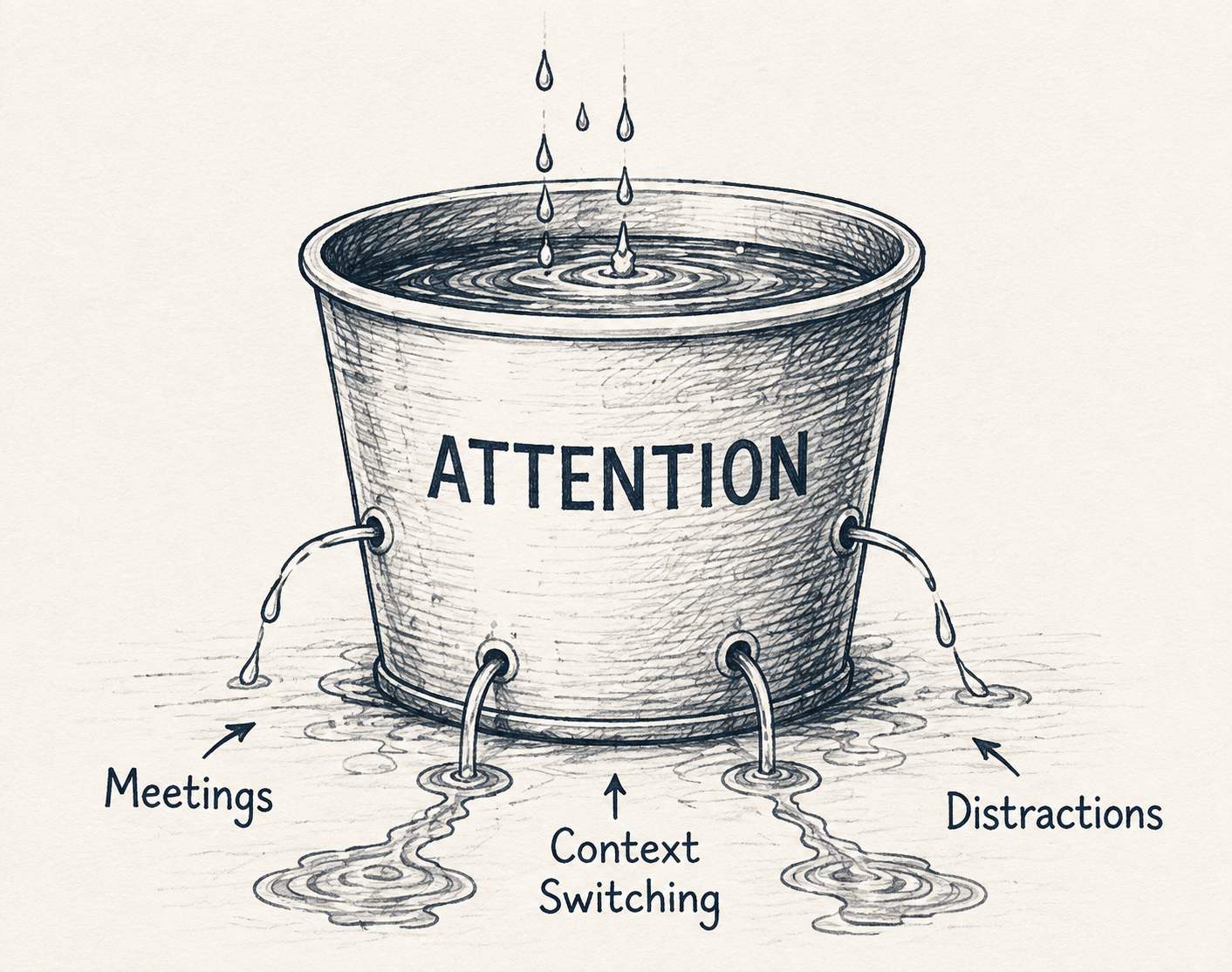
Attention is not infinite. This sounds obvious, but the way most professional environments are structured suggests we don’t actually believe it. We schedule meetings back to back. We leave notifications on. We treat the ability to switch between tasks quickly as a form of competence. And then we wonder why the work that requires sustained thought keeps getting pushed to the end of the week.
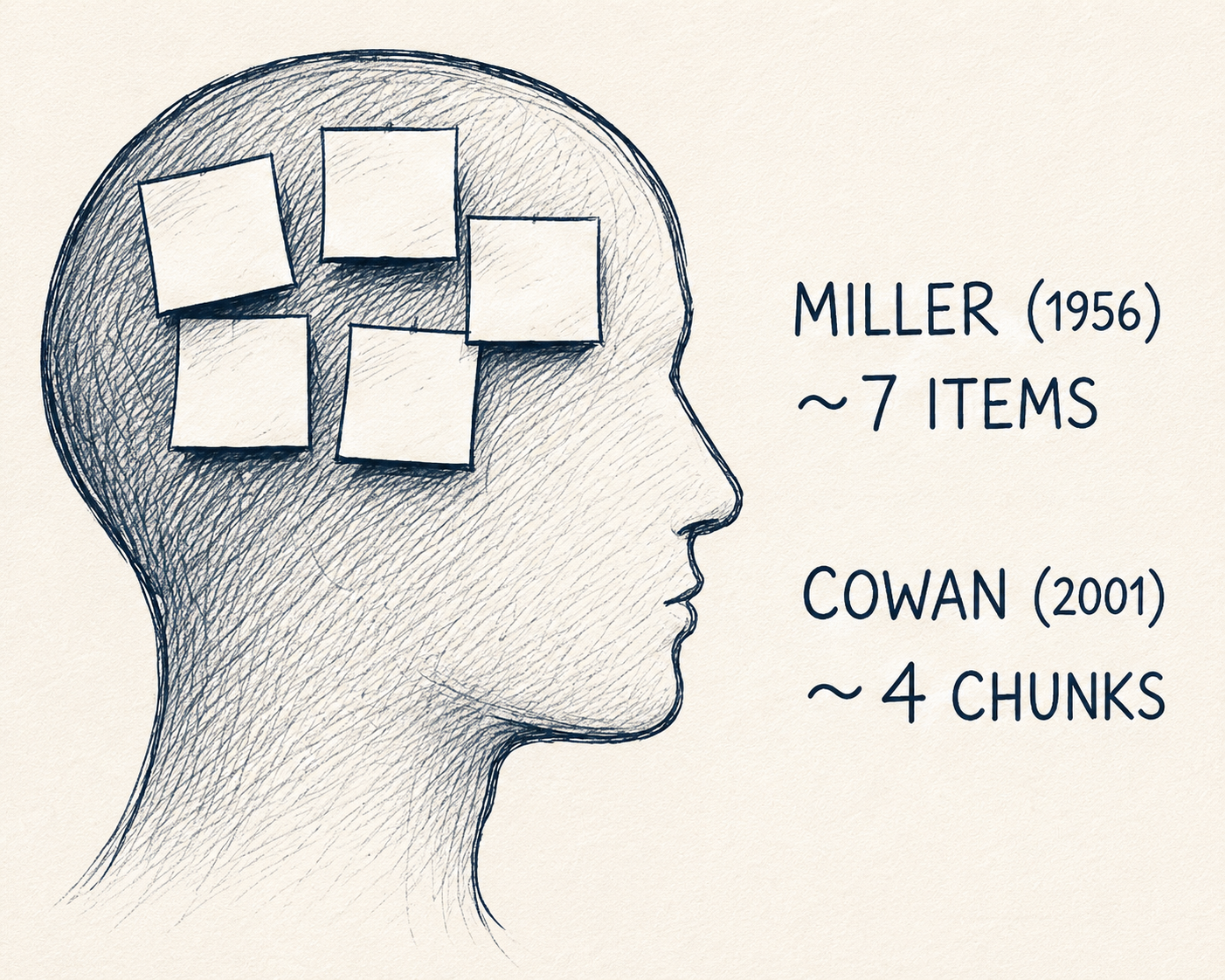
The cognitive science here is fairly settled. Working memory, the mental workspace where you hold and manipulate information while thinking, has severe capacity limits. George Miller’s foundational 1956 research established that working memory holds roughly seven items simultaneously[11]. Later work by Nelson Cowan revised that estimate downward for complex tasks, suggesting the relevant capacity may be closer to four “chunks” when the cognitive load is high. The tasks that most benefit from deep concentration are precisely the ones that push hardest against those limits.
What this means in practice: every competing demand on your attention during a complex task isn’t just a minor inconvenience. It’s drawing from the same limited pool that the task itself requires.
What an interruption actually costs
Gloria Mark at UC Irvine has spent over two decades following knowledge workers around, first with clipboards, then with cameras, then with tracking software, measuring what they actually do rather than what they report doing. Her findings have been consistent enough to be uncomfortable[1].
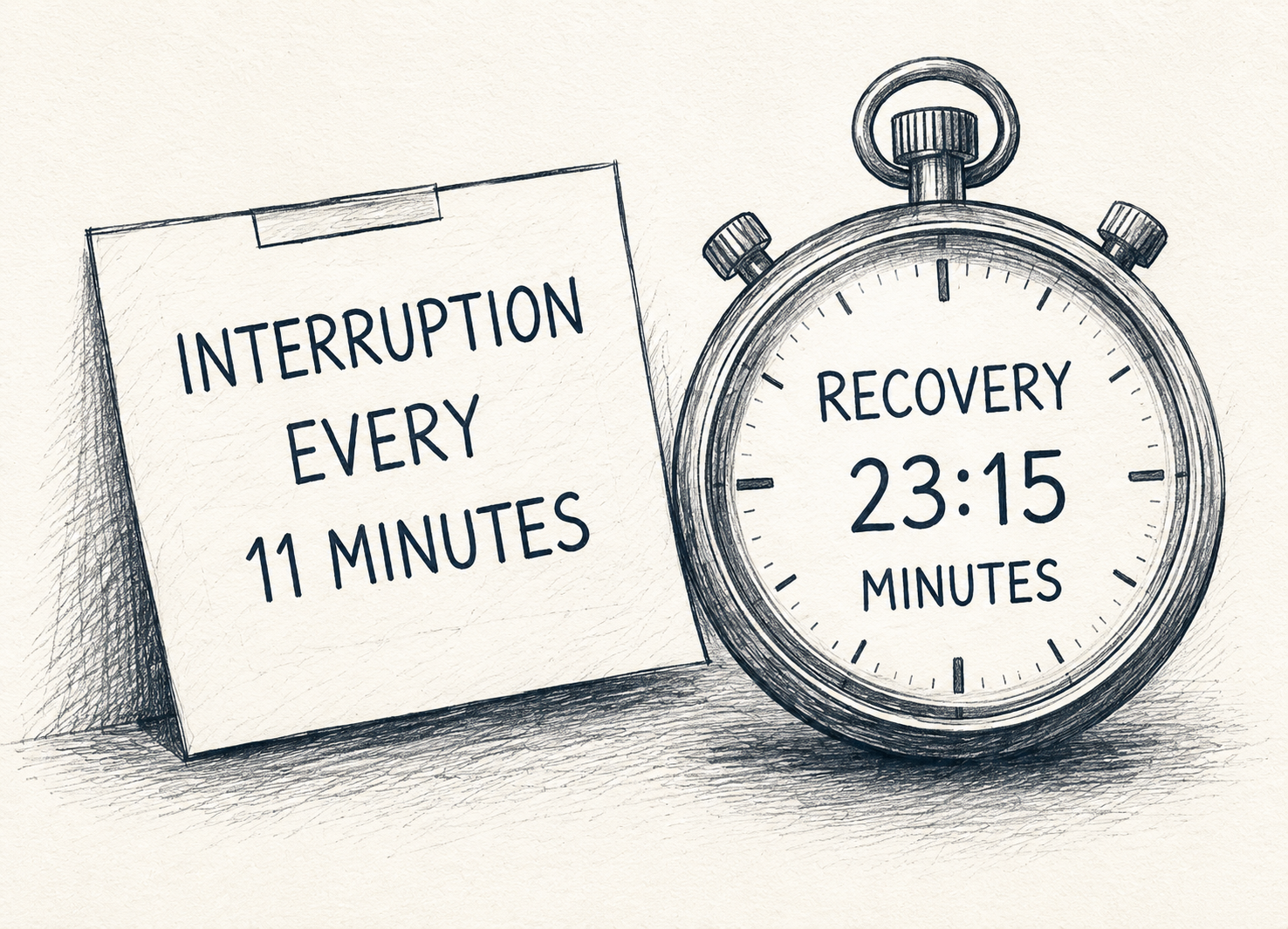
Her 2004 and 2008 studies found that after a single interruption, the average knowledge worker takes 23 minutes and 15 seconds to return to the original task at full cognitive engagement[3]. Not to sit back down at their desk. Not to open the document again. To return to the depth of focus they had before being pulled away.
Her more recent research, published in Attention Span (2023), documented something even more striking: the average time people spend on a single screen before switching has fallen from 2.5 minutes in 2004 to 47 seconds in her most recent data[2]. That’s not a rounding error. That’s a collapse in the basic unit of sustained attention, measured across two decades of observation.
And interruptions arrive, on average, every 11 minutes. Set that against a 23-minute recovery time and the arithmetic doesn’t resolve. For many knowledge workers, genuine focus, the kind that produces real output, is never reached at all on an ordinary day.
Why switching feels cheaper than it is
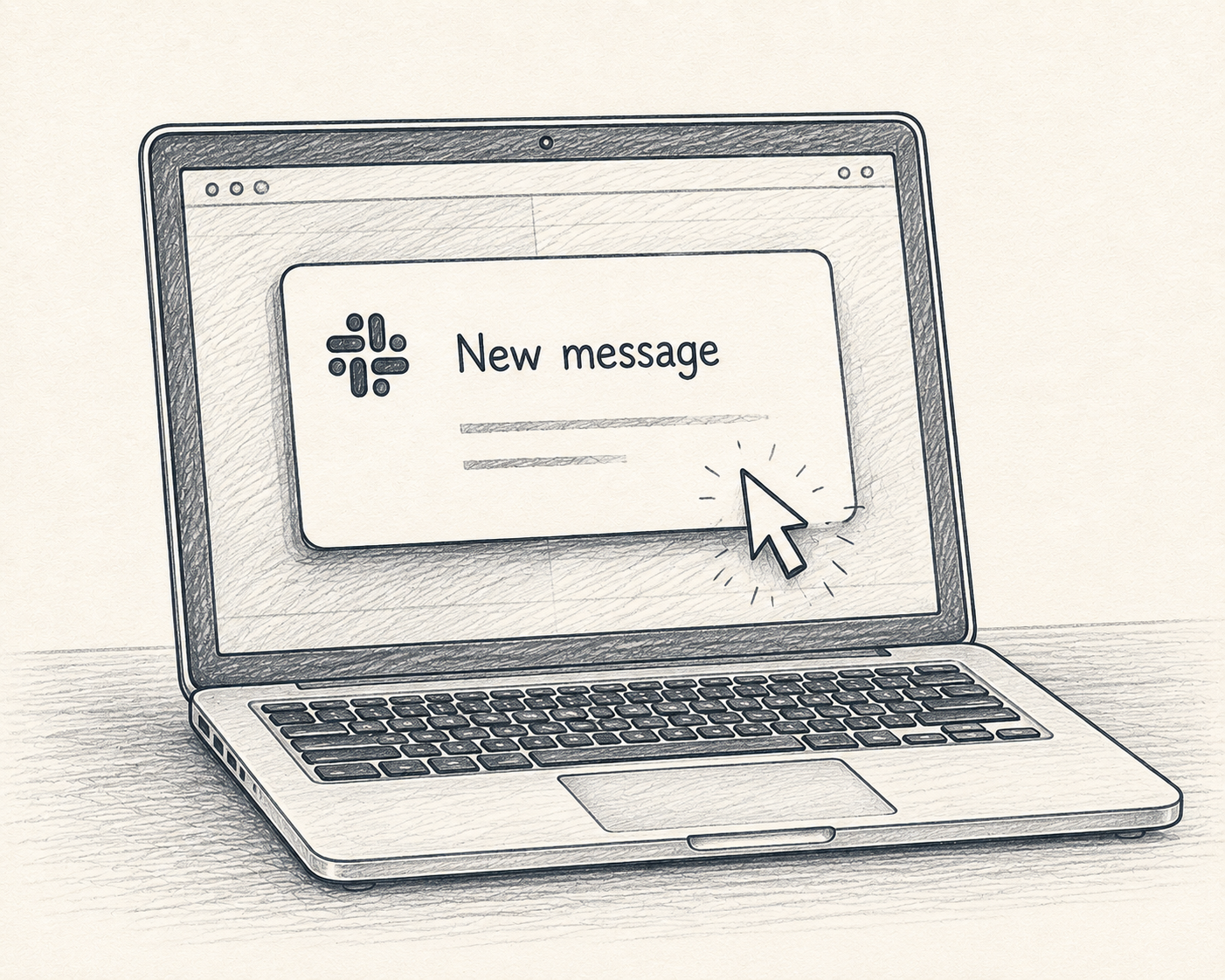
Part of the problem is that the cost of switching is largely invisible. When you glance at a Slack message, you don’t feel 23 minutes drain away. You feel like you handled something quickly and got back to work. The subjective experience of switching is almost nothing. The cognitive cost is substantial.
Sophie Leroy at the University of Washington named the mechanism in her 2009 research: attention residue[4]. When you switch from an incomplete task to a new one, cognitive processing of the first task doesn’t stop. It persists in working memory, quietly consuming resources while you try to focus on something else. You’re working with a fraction of your available capacity, and you may not notice it at all.
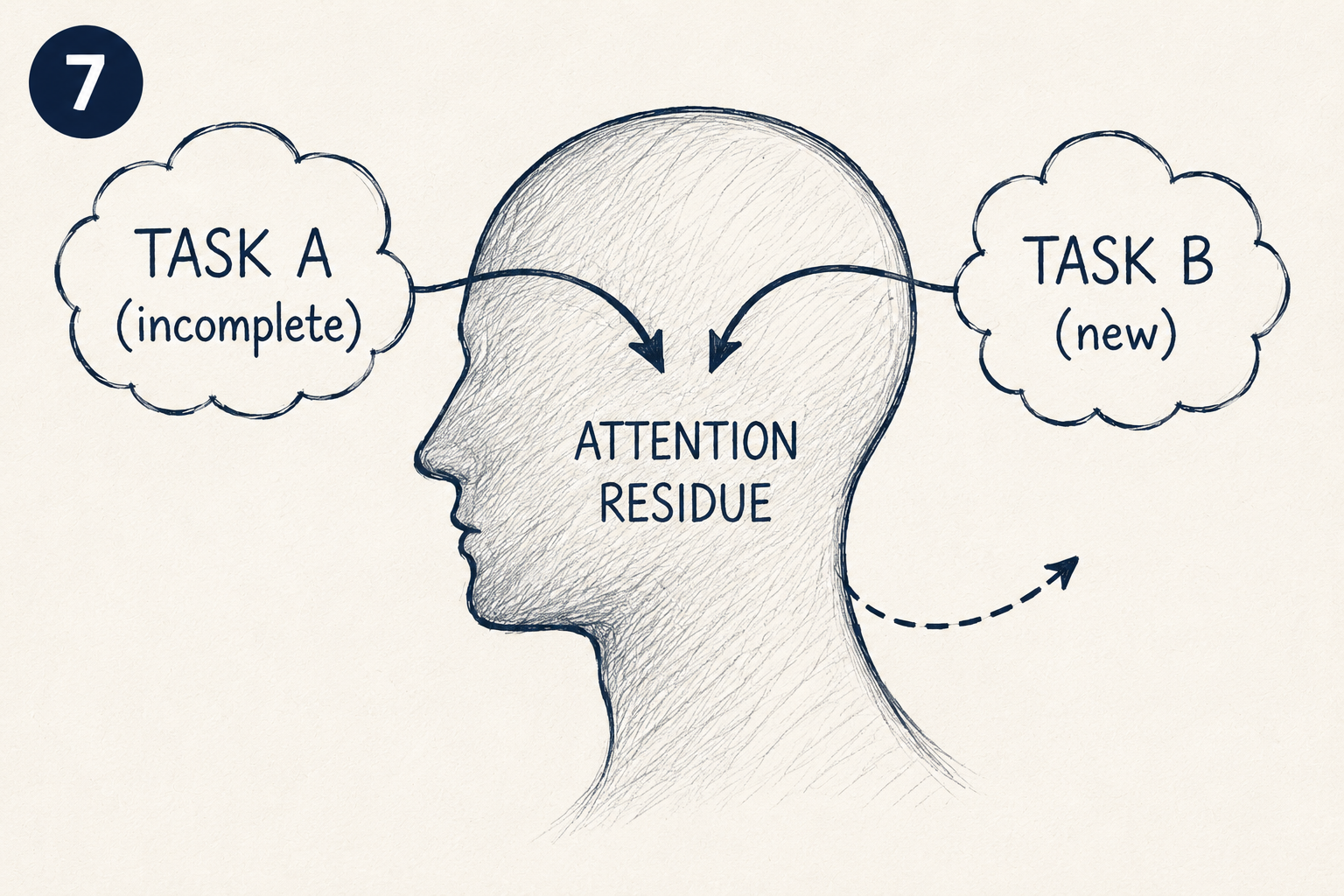
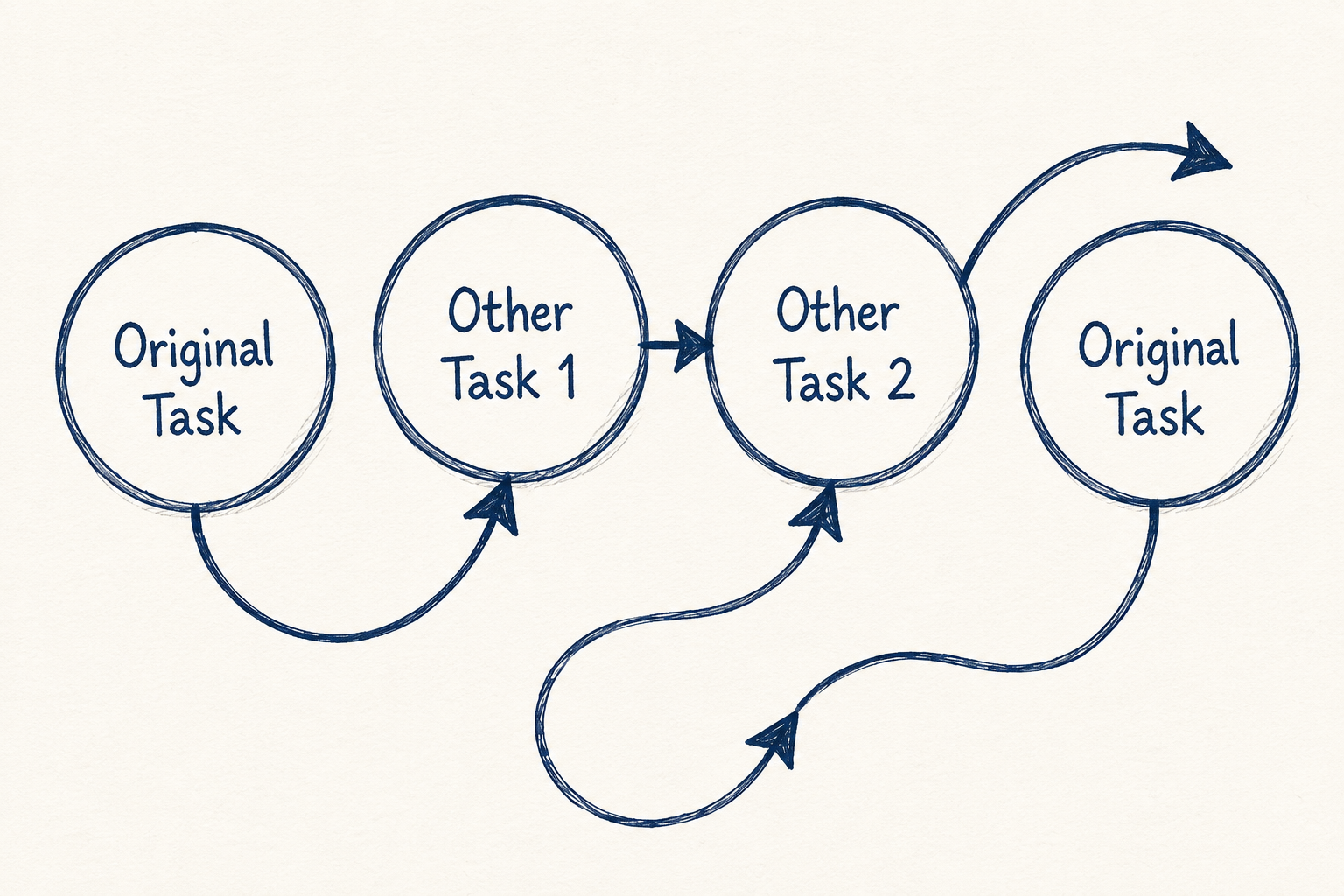
Leroy’s 2018 follow-up research (with Theresa Glomb, published in Organization Science) found a practical intervention: before switching tasks, spending 60 seconds writing down where you are and what the next step is significantly reduces attention residue. The act of externalising the incomplete task gives the brain permission to let go of it[5].
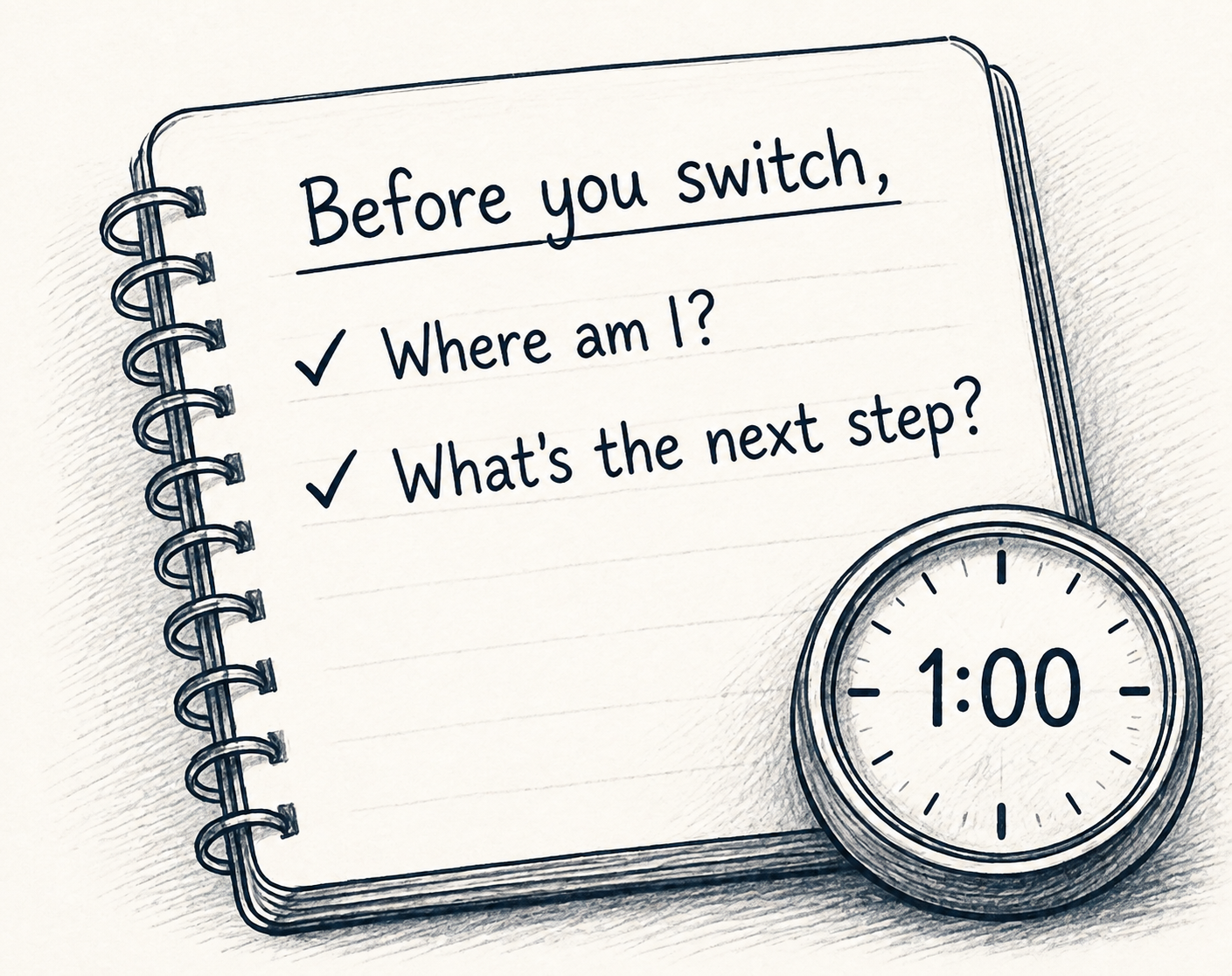
Mark’s observational data added another layer. Interrupted workers rarely return directly to what they were doing. On average, they complete two other tasks before returning to the original one. Each of those transitions carries its own residue. By the time you’re back, the mental context, the working memory contents, the thread of reasoning, the half-formed idea, is largely gone.
The ceiling that most people never reach
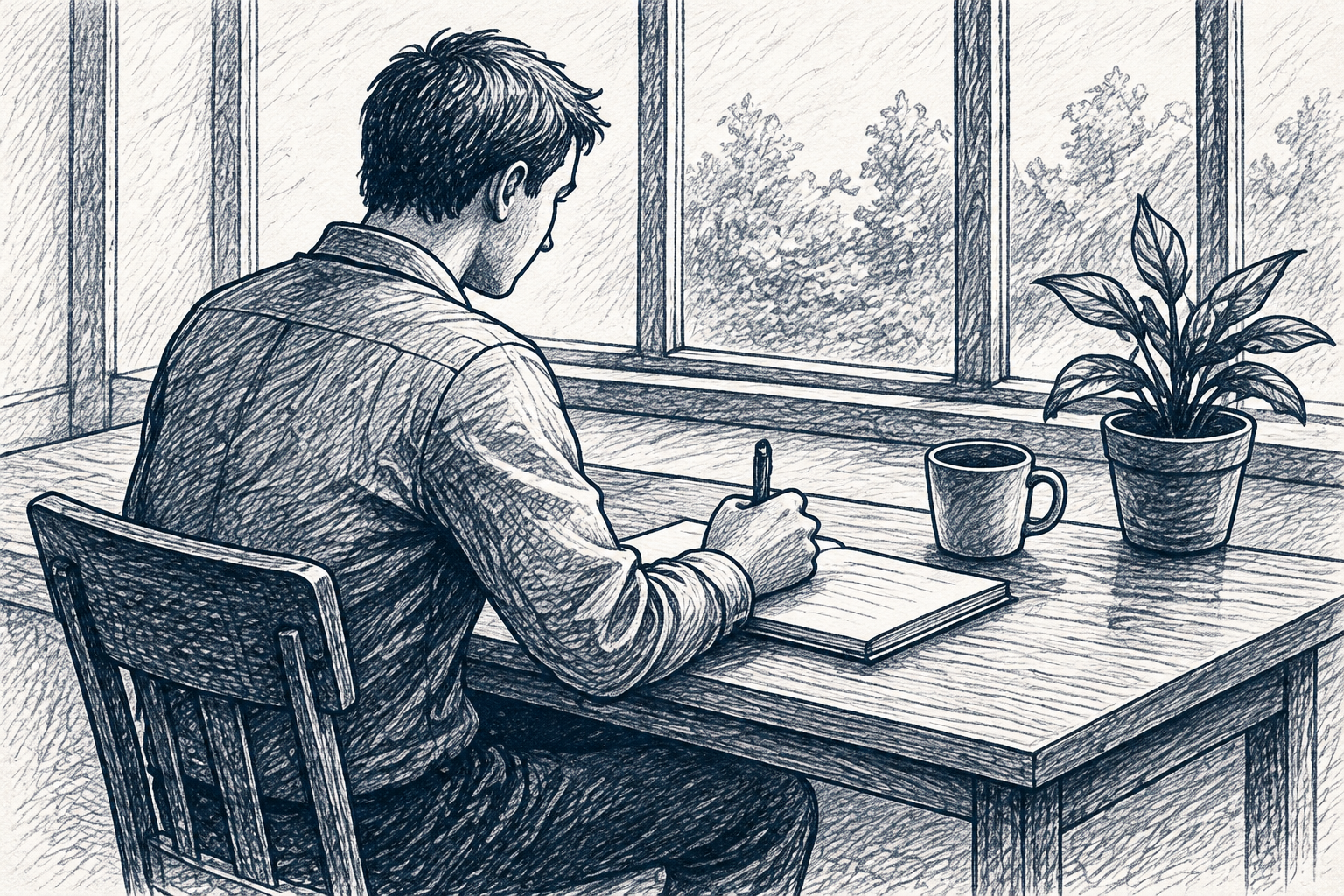
Anders Ericsson’s research found that elite performers rarely sustained more than three to four hours of genuine deliberate practice per day. The limit is biological, not motivational.
Anders Ericsson spent decades studying expert performance, violinists, chess masters, surgeons, athletes. His 1993 study of violinists at the Music Academy of West Berlin found that the best performers had accumulated dramatically more hours of one specific type of practice: structured, solitary, full-attention work designed to address specific weaknesses. Not rehearsals. Not performances. Deliberate practice[6].
What’s less often cited from that research: the elite performers rarely sustained more than three to four hours of this kind of work per day. Many of the most productive showed a pattern closer to two to three hours of peak-quality work in the morning, followed by rest. The limit wasn’t willpower. It was the cognitive resource itself.
Mihaly Csikszentmihalyi’s research on flow states adds a related finding. Reaching the state of complete immersion that produces the highest-quality work takes roughly 15 to 20 minutes of uninterrupted engagement[7]. That’s longer than the average gap between interruptions in a typical knowledge work environment. Which means for many people, flow is not reached at all, not because they lack the capacity for it, but because the conditions for it are never established.
The compounding effect is worth understanding. An interruption at minute three of a focus session costs three minutes of warm-up plus 23 minutes of recovery: 26 minutes total. An interruption at minute 24, one minute before flow would have been reached, costs 24 minutes of warm-up plus 23 minutes of recovery: 47 minutes, and you never got the benefit of the deep state at all. The later in a session an interruption occurs, the more expensive it is.
What this looks like in practice
Consider a fairly ordinary professional morning. You arrive, check email, respond to a few messages. A colleague asks a quick question. You open the document you need to work on. A notification appears, you don’t act on it, but you see it. Thirty minutes later, you’re in a meeting. After the meeting, you return to the document.
By the time you sit down to do the actual work, you may have accumulated several incomplete cognitive loops, each carrying residue. The document is open. The cursor is blinking. But the mental state required to do the work, the state that took 20 minutes to build before the meeting, has to be rebuilt from scratch.
Mark’s research found that workers who experience frequent interruptions compensate by working faster to make up lost time. This drives up error rates and reduces output quality, even when the quantity of work looks similar on paper. More energy spent, worse work produced. That’s the actual exchange[1].
Microsoft’s Work Trend Index found that 48% of employees and 52% of leaders describe their work as chaotic and fragmented. It’s notable that leaders report it more than the people they manage, which suggests the problem isn’t primarily about individual discipline. It’s structural[12].
What actually helps
The research points toward a few interventions with reasonable evidence behind them. None of them are complicated. Most require changing the environment rather than changing yourself.
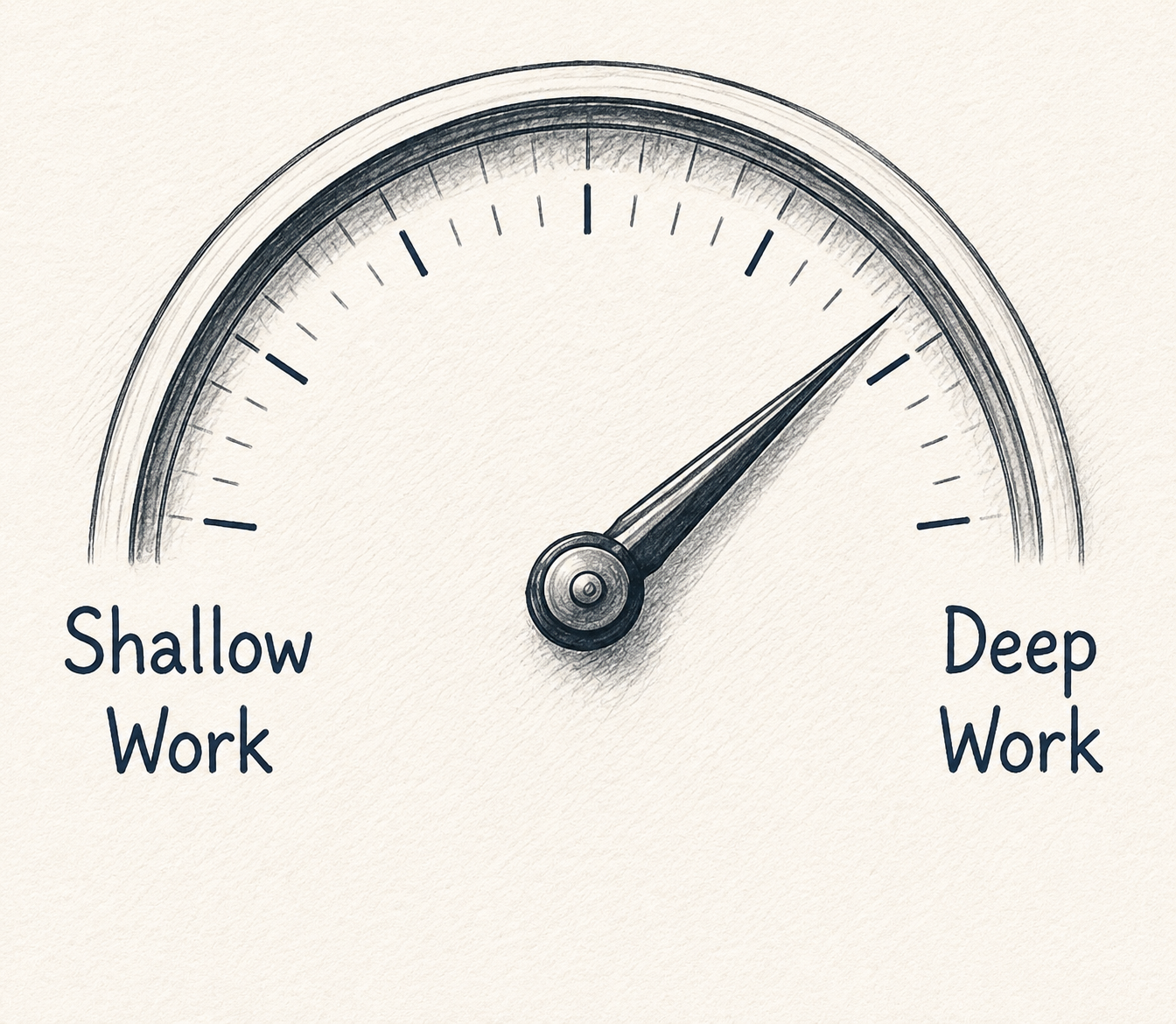
Batch communication.
Kushlev and Dunn (2015) found that limiting email to three specific windows per day left people significantly less stressed and equally productive compared to constant checking[9]. The key finding: most messages that feel urgent aren’t. The expectation of immediate response is largely self-imposed.
Move the phone.
Ward et al. (2017) at UT Austin found that cognitive capacity, working memory, fluid intelligence, was measurably higher when phones were in another room versus on a desk, even silent and face-down[8]. The mere presence of the device divides attention. You don’t have to be using it for it to cost you something.
Close the loop before switching.
Leroy’s research showed that attention residue is strongest when you switch away from an unfinished task. Before any mandatory transition, spend 60 seconds writing where you are and what the next step is. It gives the brain permission to disengage[5].
Protect the block, not just the time.
A two-hour block with four interruptions may produce less genuine cognitive output than a 45-minute block with none. The threshold matters more than the total time. Reducing distractions from five per hour to three per hour doesn’t give you 40% more deep work if none of those three interruptions allow a full 20-minute uninterrupted stretch.
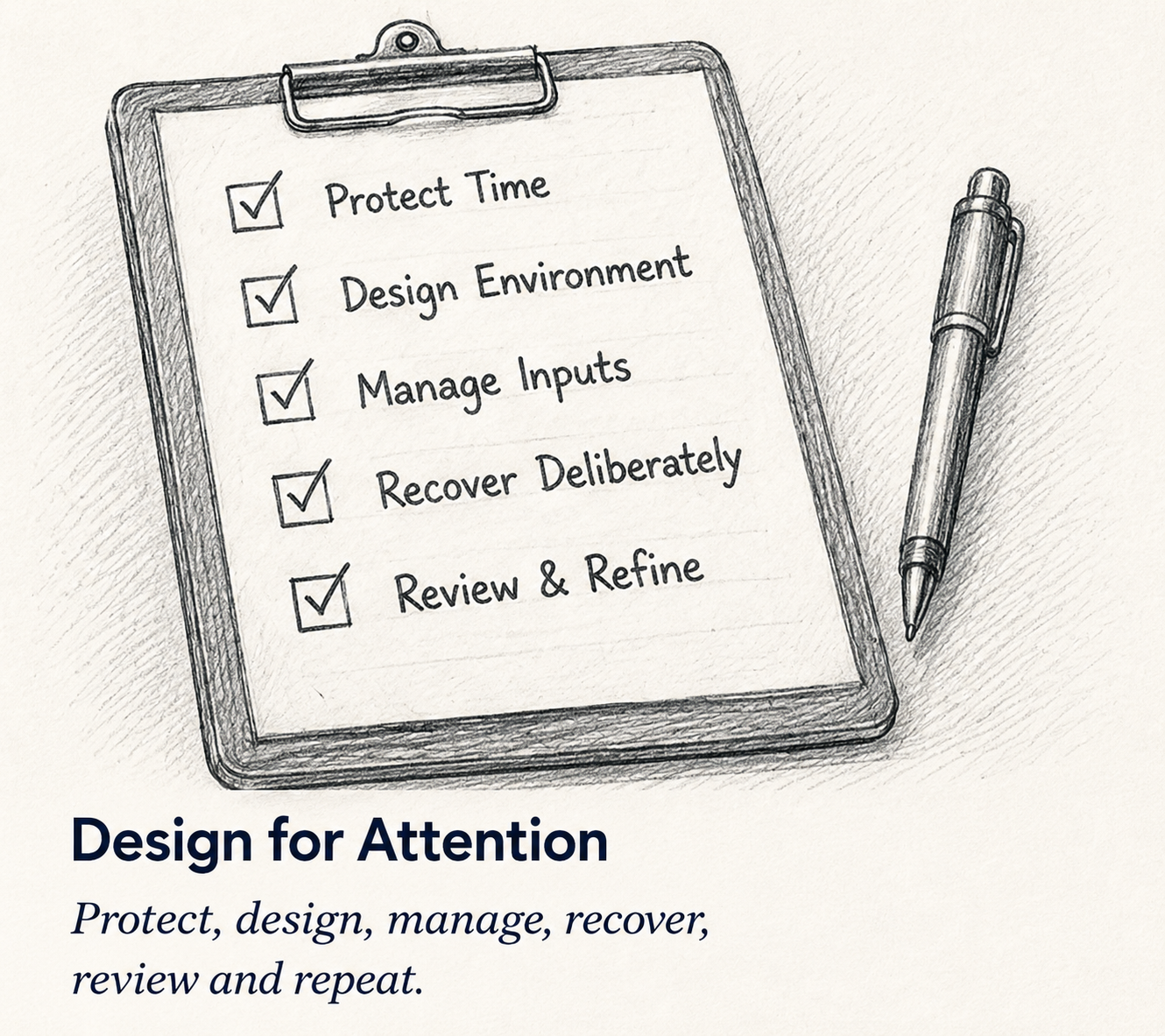
The environment shapes the work. Designing for focus is not about willpower. It’s about removing the conditions that make distraction easy.
The mistake most people make
The most common response to a fragmented workday is to try to work longer. If the morning was interrupted, work through lunch. If the afternoon was consumed by meetings, stay late. This feels like discipline. It’s actually a way of doing shallow work for more hours.
Ericsson’s research is clear on this point: the elite performers he studied didn’t work more hours than their peers. They worked fewer hours of a specific kind, full-attention, deliberately structured, cognitively demanding, and then stopped. Adding hours of distracted work doesn’t compound the output of focused work. It just depletes the resource faster[6].
There’s also a subtler mistake: treating focus as a character trait rather than a condition. The people who seem to produce a lot of high-quality work aren’t necessarily more disciplined than everyone else. They’ve often just arranged their environment so that distraction has fewer opportunities to start. The difference is structural, not personal.
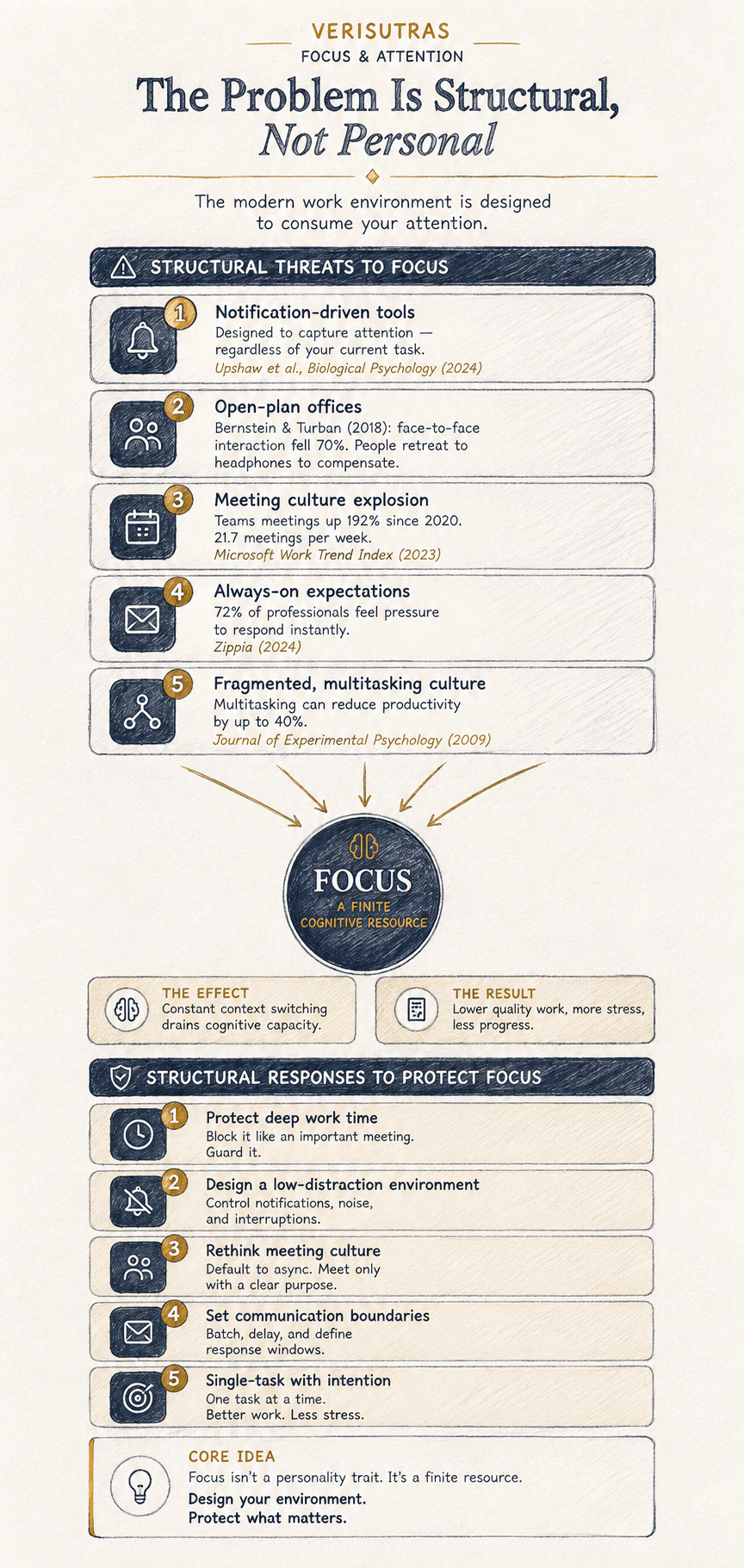
Protecting Your Focus: A Practical Checklist
- Schedule your most cognitively demanding work in a single uninterrupted block, ideally in the morning, before the day fragments.
- Before that block begins, close email, silence notifications, and put your phone in another room (not face-down on the desk).
- Before any mandatory task switch, spend 60 seconds writing where you are and what the next step is.
- Batch communication into two or three specific windows rather than checking continuously.
- Treat the block as protected time. Not “I’ll try not to be interrupted” but “I am unavailable for this period.”
- After the block, take a genuine break before attempting a second one. The resource depletes; it also recovers.
- Track interruptions for one week. Count both external ones and the ones you initiate yourself. The ratio is usually surprising.
A question worth sitting with
The research on attention is not new. Gloria Mark’s foundational work is over twenty years old. Ericsson’s studies of deliberate practice go back to 1993. Csikszentmihalyi’s work on flow is older still. The findings have been replicated, extended, and refined. They are not contested.
And yet the average time on a single screen has fallen by a factor of three in the time since Mark first started measuring it. The meetings have multiplied. The notifications have proliferated. The expectation of immediate response has hardened into a norm.
Which raises a question the research doesn’t fully answer: if we know what focus requires, and we know what destroys it, why have the conditions for it gotten worse rather than better? Perhaps the honest answer is that the systems we work inside, the tools, the norms, the meeting cultures, were not designed with cognitive capacity in mind. They were designed for responsiveness, visibility, and coordination. Focus was assumed, not protected.
Protecting attention is not primarily a personal project. It’s an organisational one. And most organisations haven’t started yet.
Key Takeaways
- After a single interruption, it takes an average of 23 minutes and 15 seconds to return to full cognitive engagement, not to sit back down, but to regain the depth of focus you had before.
- Attention residue means that switching from an incomplete task leaves part of your cognitive capacity occupied with the previous task, even after you’ve moved on.
- The average time on a single screen has fallen from 2.5 minutes in 2004 to 47 seconds in Gloria Mark’s most recent data. A structural collapse in sustained attention, not a personal failing.
- Reaching flow takes 15 to 20 minutes of uninterrupted work. Interruptions arrive every 11 minutes on average. For many people, flow is never reached on an ordinary day.
- Elite performers cap genuine deep work at three to four hours per day. The limit is biological. Adding distracted hours doesn’t extend it.
- The fix is environmental, not motivational. Designing conditions where distraction has fewer opportunities to start is more effective than trying to resist it once it arrives.
References
[1] Mark, G., Gudith, D., & Klocke, U. (2008). The Cost of Interrupted Work: More Speed and Stress. CHI 2008. UC Irvine. ics.uci.edu
[2] Mark, G. (2023). Attention Span: A Groundbreaking Way to Restore Balance, Happiness and Productivity. Hanover Square Press.
[3] Mark, G., Gonzalez, V. M., & Harris, J. (2005). No Task Left Behind? Examining the Nature of Fragmented Work. CHI 2005. ics.uci.edu
[4] Leroy, S. (2009). Why is it so hard to do my work? The challenge of attention residue when switching between work tasks. Organizational Behavior and Human Decision Processes, 109(2), 168-181. ScienceDirect
[5] Leroy, S., & Glomb, T. M. (2018). Tasks Interrupted: How Anticipating Time Pressure on Resumption of an Interrupted Task Causes Attention Residue. Organization Science, 29(3), 380-397. JSTOR / INFORMS
[6] Ericsson, K. A., Krampe, R. T., & Tesch-Romer, C. (1993). The role of deliberate practice in the acquisition of expert performance. Psychological Review, 100(3), 363-406.
[7] Csikszentmihalyi, M. (1990). Flow: The Psychology of Optimal Experience. Harper & Row.
[8] Ward, A. F., Duke, K., Gneezy, A., & Bos, M. W. (2017). Brain Drain: The Mere Presence of One’s Own Smartphone Reduces Available Cognitive Capacity. Journal of the Association for Consumer Research, 2(2), 140-154.
[9] Kushlev, K., & Dunn, E. W. (2015). Checking email less frequently reduces stress. Computers in Human Behavior, 43, 220-228.
[11] Miller, G. A. (1956). The magical number seven, plus or minus two: Some limits on our capacity for processing information. Psychological Review, 63(2), 81-97.
[12] Microsoft Work Trend Index (2023). Will AI Fix Work? Microsoft Corporation. microsoft.com