 Verisutras
The Second Bill
Every decision looks right today. Its real cost decides if it is good or bad decision much later.
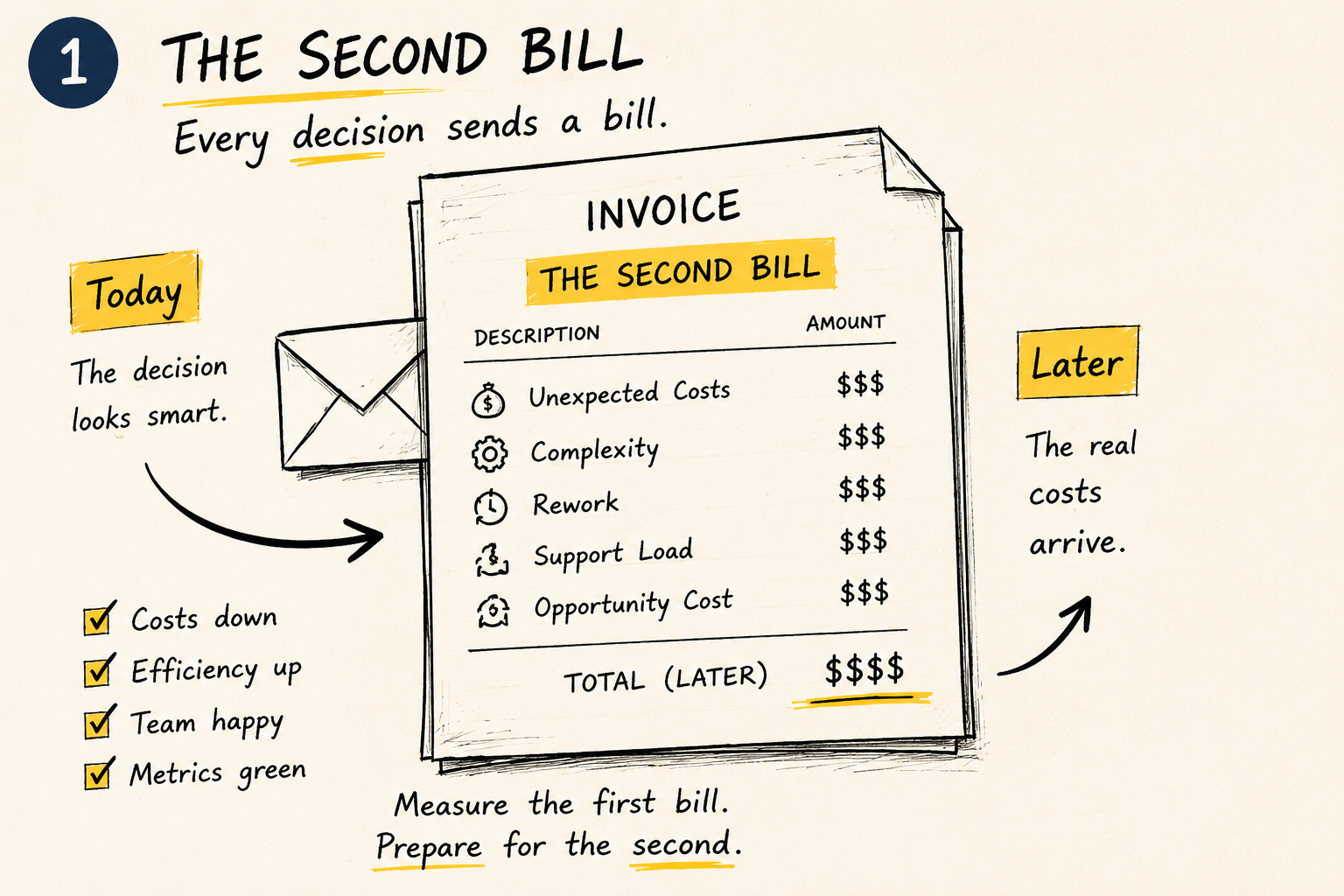
Every decision sends a bill. The second one arrives later.
In 2024 and 2025, artificial intelligence became the fastest cost-cutting initiative many companies had ever adopted. Boardrooms celebrated the numbers: leaner teams, higher productivity, lower expenses. The future had arrived, or so it seemed.
Then a second bill arrived. Not the salary bill, the AI bill: monthly token costs kept growing, developers spent weeks fixing edge cases that never showed up in pilot projects, and legal and security teams introduced new layers of governance. The savings were real. So were the new expenses.
Some organizations discovered something more surprising still: the people they had let go were often the same people they now needed to solve the problems AI couldn’t handle. Automation took over the routine work, and humans were left with everything that remained, which turned out to be the hardest part.
None of this means AI failed. It means many organizations measured only the first outcome: lower payroll, higher productivity, faster delivery. Few spent enough time asking what would happen after AI became part of everyday operations. The first decision solved one problem. The second bill arrived later.
We celebrate too early
This isn’t really an AI problem. It’s a human one. Every generation believes it has found the next silver bullet: outsourcing, cloud computing, microservices, automation, and now artificial intelligence. Each one solved real problems. Each one created new ones.
The organizations that benefited most weren’t necessarily the first to adopt the new technology. They were the first to understand its consequences.
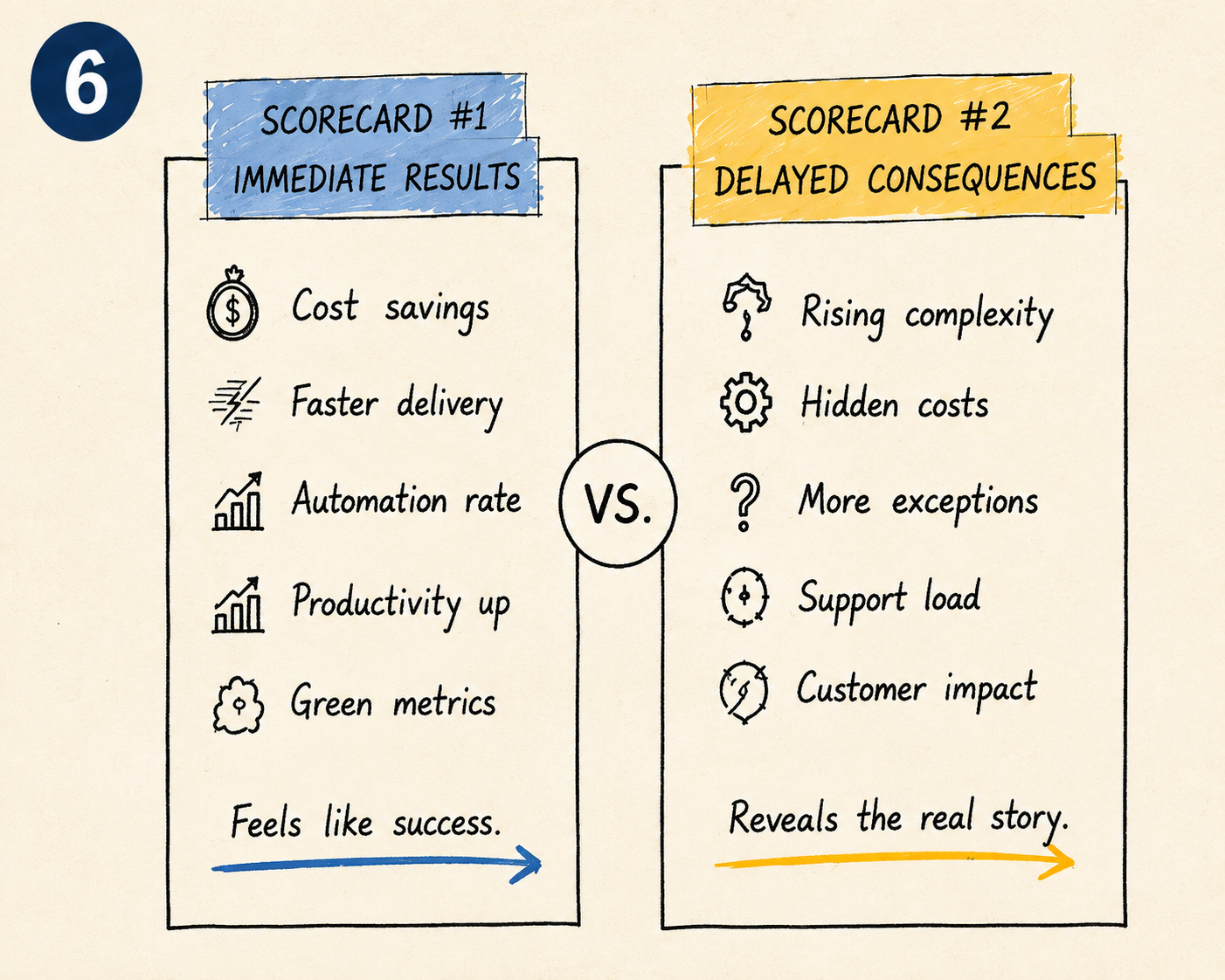
Every important decision creates two scorecards. Most organizations stop reading after the first one.
Friday deployment, Monday firefight
Picture a software release that goes out on a Friday. Every dashboard is green, every test passes, and the team is congratulated. By Monday, the first production ticket appears. By Wednesday, developers are back fixing code they thought they’d finished, and the support team has stopped answering routine questions because they’re firefighting instead.
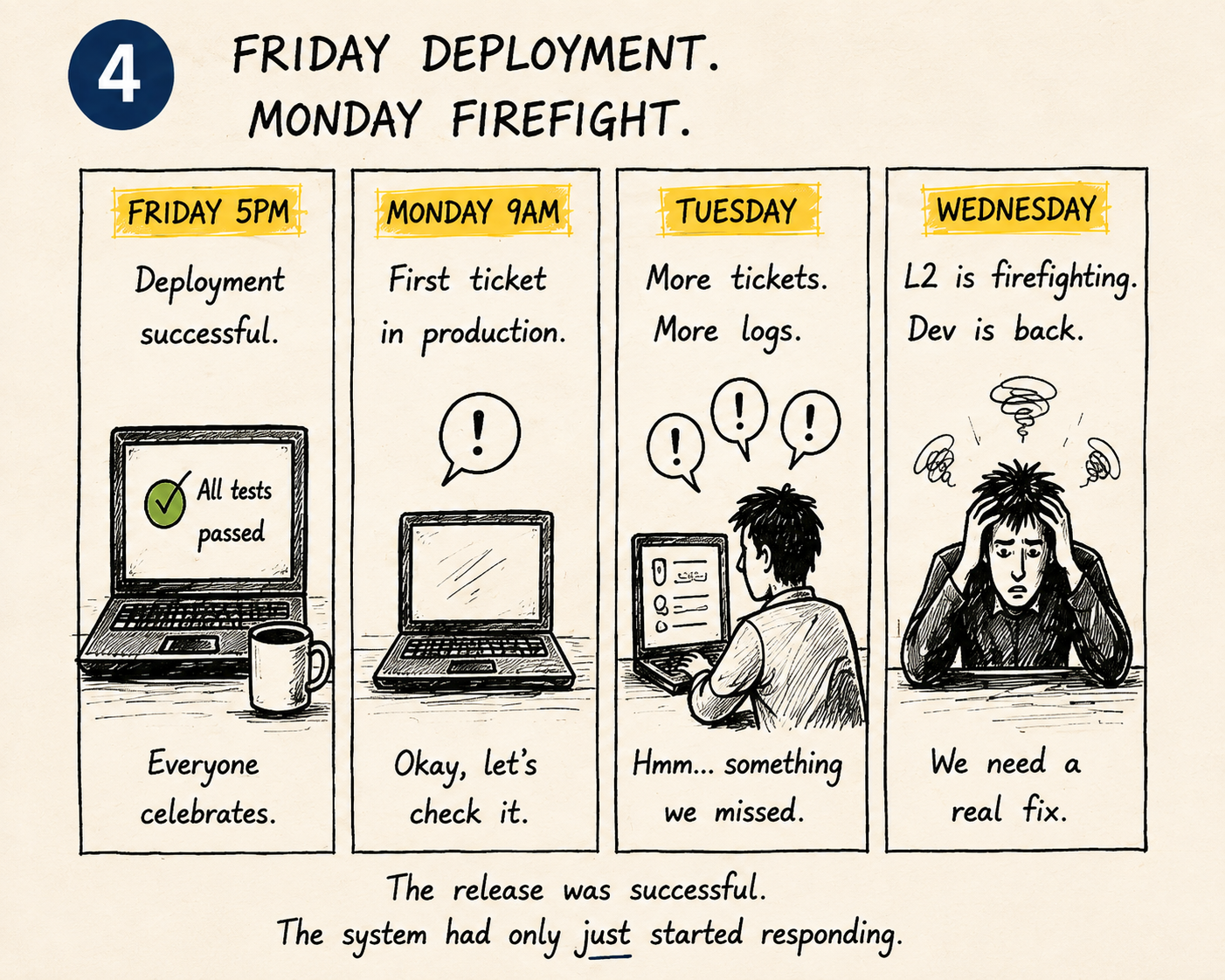
One production issue exposes another. A workaround creates a new dependency. An overlooked edge case breaks a downstream service. This isn’t business as usual. It’s the domino effect of small decisions nobody thought would matter. The release wasn’t the problem. The system had only just started responding to it.
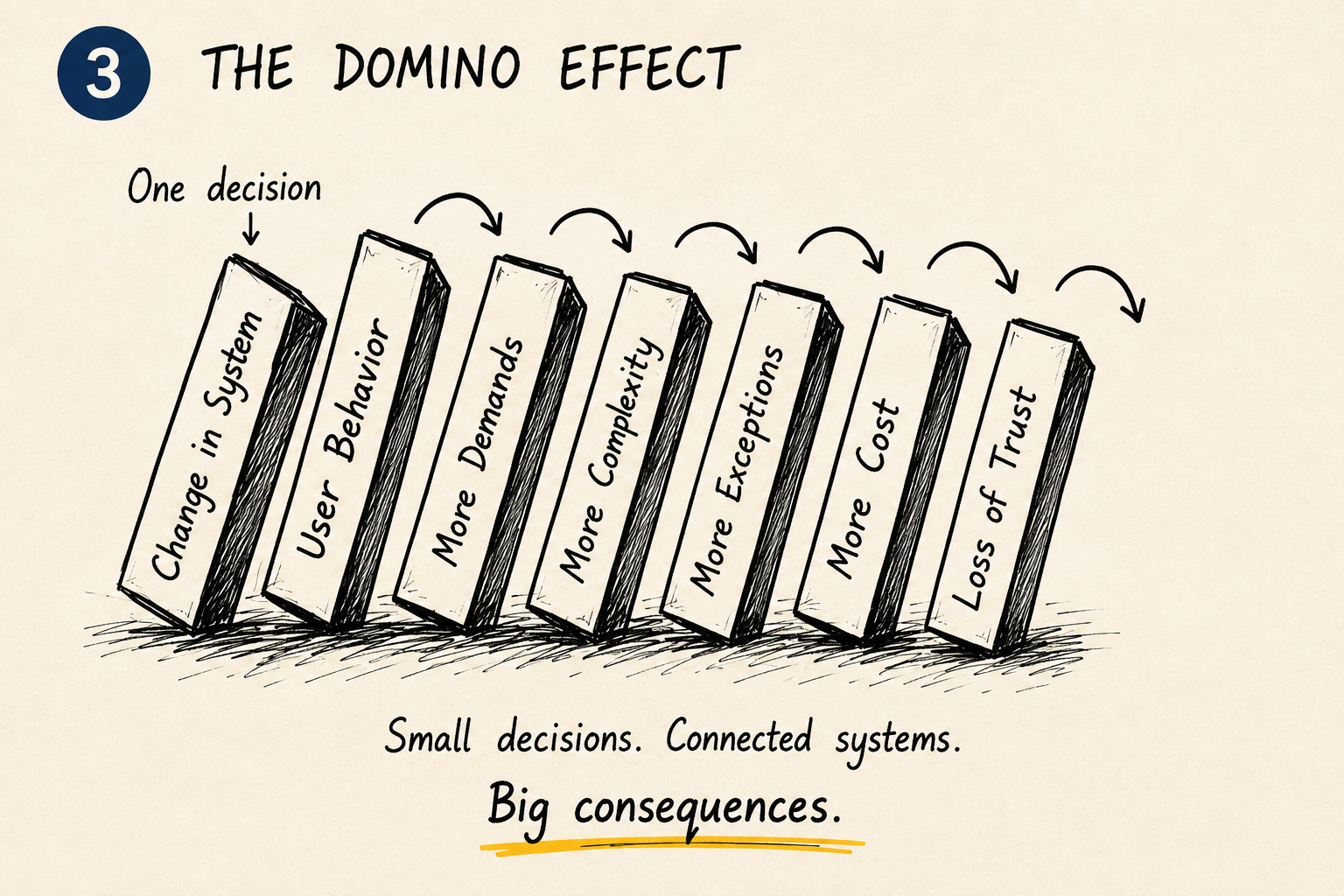
Small decisions. Connected systems. Big consequences.
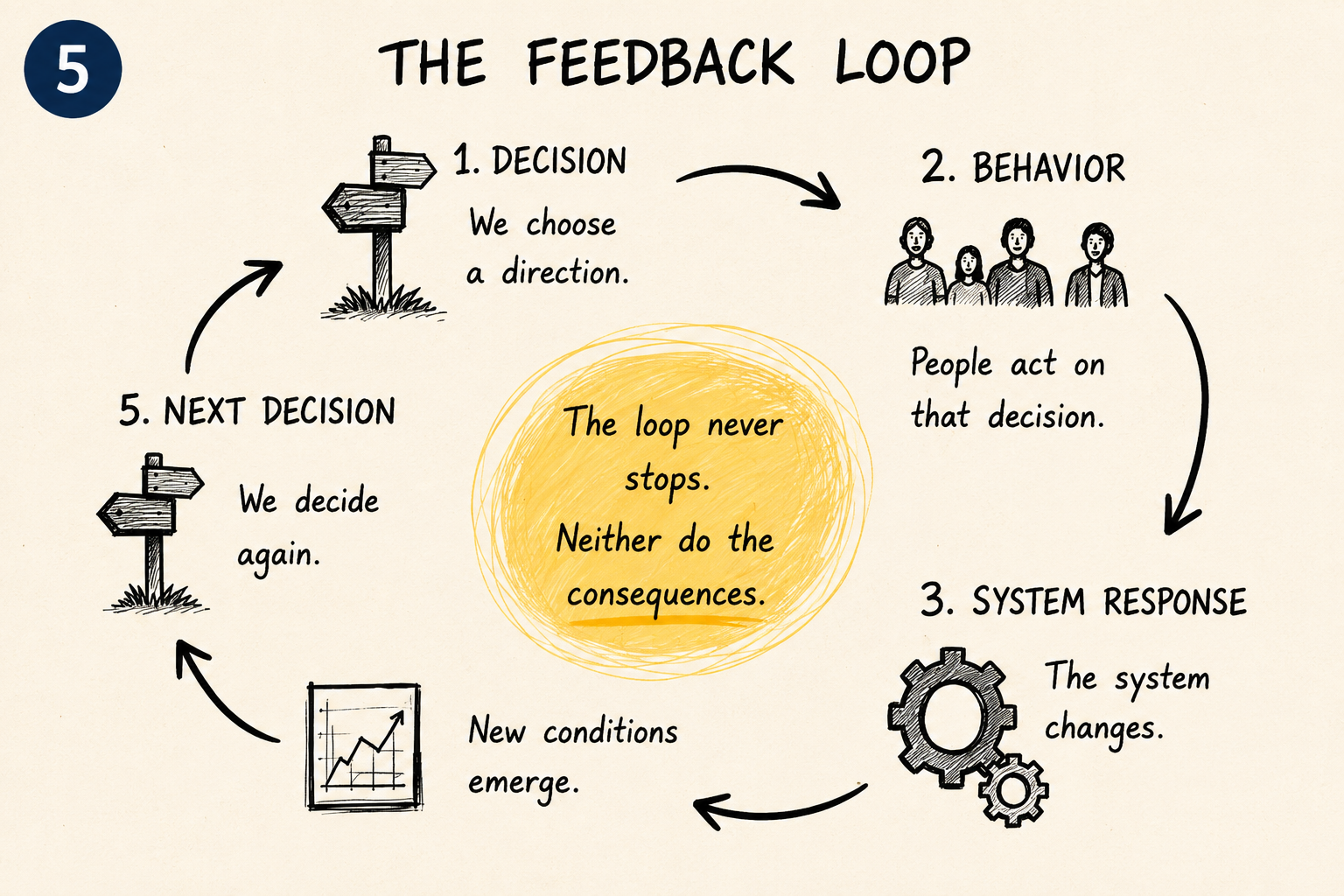
Every decision changes the system
Picture a new flyover built to ease traffic in a crowded city. Traffic improves, people celebrate, and new businesses move into the area. A year later, traffic is back, sometimes worse than before.
Did the flyover fail? No. It worked exactly as intended. The city changed because of it. Customers change, competitors react, employees adapt, and markets respond.

The first result is visible. Most of the work begins below the surface.
The world doesn’t hold still while an organization celebrates yesterday’s decision. That’s exactly why first impressions can be so misleading: they capture the moment, but rarely what happens next.
The pattern has existed for decades
That line doesn’t apply to every problem or every solution, just enough of them to be worth pausing over before celebrating too early.
The question that changes better decisions
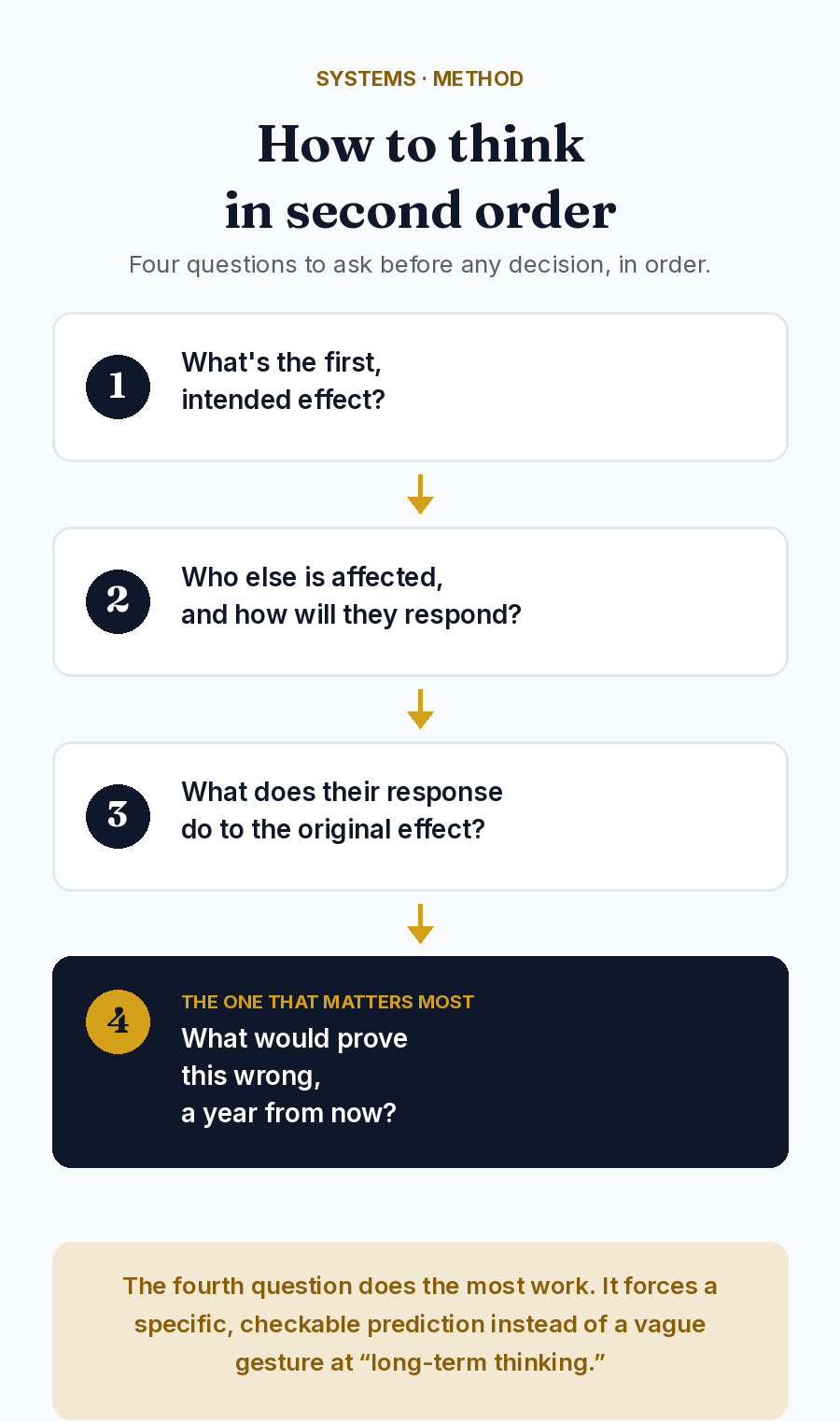
Walk into almost any project review and you’ll hear the same familiar questions: what’s the budget, are we on schedule, can we launch this quarter. All important. One question is usually missing: if this works exactly as planned, what new problem could it create six months from now?
That single question changes the conversation. It forces people to think beyond launch day, beyond the quarterly report, beyond immediate success. Nobody expects a perfect prediction. The goal isn’t to predict everything. It’s to stop being surprised by the obvious.
The second bill
The easiest costs to measure show up on invoices: cloud costs, software licenses, API usage, vendor contracts. The harder costs show up somewhere else: developers returning to old code instead of building new products, support engineers investigating incidents at night, managers delaying roadmaps because stability suddenly matters more than innovation, customers quietly losing confidence.
Those costs rarely arrive all at once. They arrive as lost momentum, which is exactly why they’re so easy to ignore, until they’re impossible to.
Before your next important decision
Don’t ask only whether it will work. Ask what changes after it works. That question won’t eliminate risk, and it won’t predict every consequence. But it will slow you down just enough to notice what everyone else is too busy celebrating, and sometimes that pause is the difference between a good quarter and a good business.
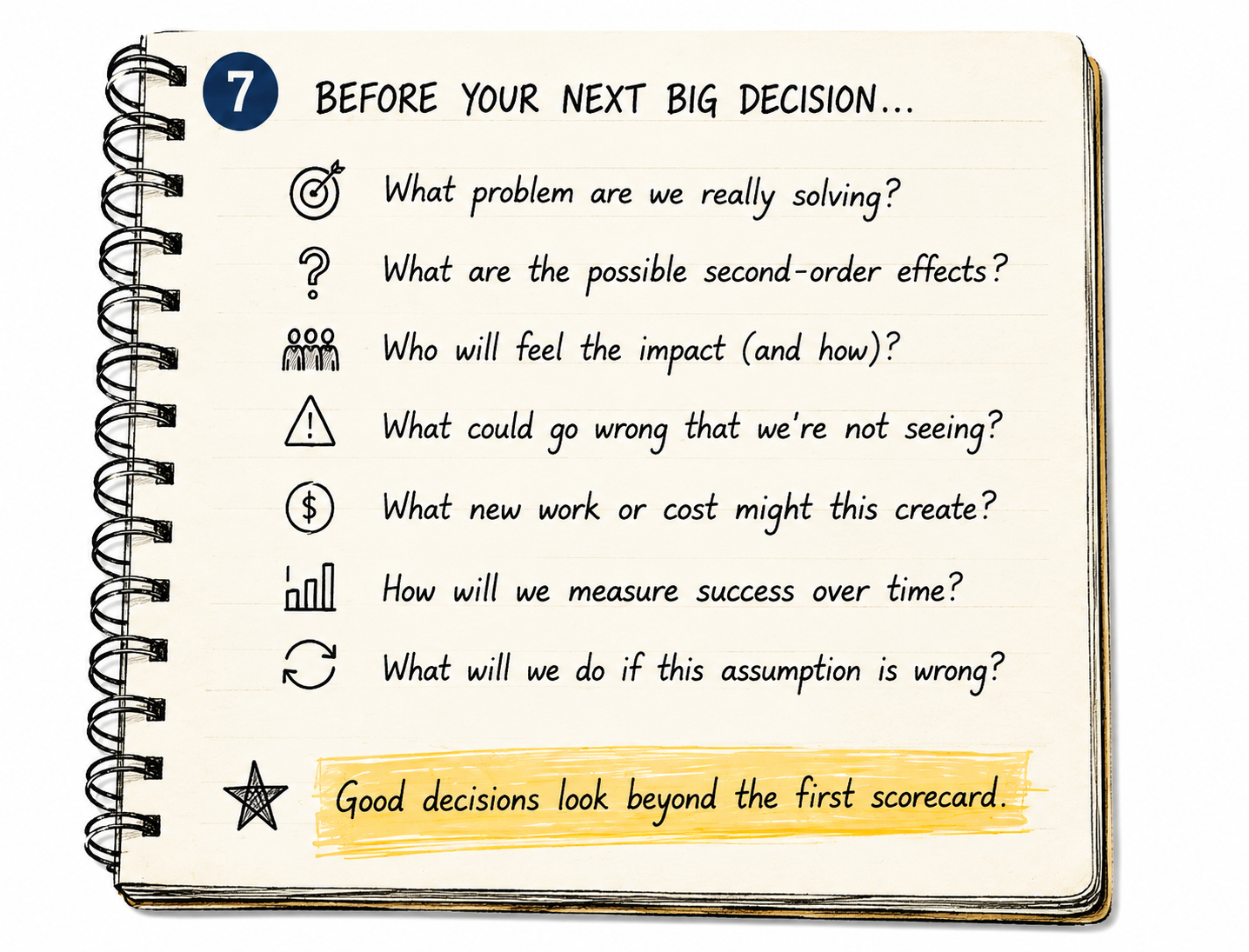
The organizations that thrive aren’t the ones that avoid the second bill. They’re the ones that expect it.
References
1. Klarna’s AI customer service reversal is documented in Bloomberg’s May 2025 interview with CEO Sebastian Siemiatkowski, summarized at Klarna (company).
2. Jay Forrester’s foundational work on system dynamics is documented at Jay Wright Forrester.
3. Peter Senge’s The Fifth Discipline: The Art and Practice of the Learning Organization (1990) popularized the idea that today’s problems often come from yesterday’s solutions.